Change has been the only constant in 2026 thus far. The political instability, economic volatility, and rapid technological disruptions we are witnessing are creating a collective craving for clarity and control. Ironically, however, what we often most need in such a climate is not a tighter grip, but deeper connection.
We believe the antidote is having courageous conversations – not the ones you want to have, but the ones you need to have. The kind where leaders listen beyond the words, read the assumptions and emotions underneath, and respond with clarity and care. This is not soft leadership, it is skilled leadership.
Based on what we’ve heard and seen so far this year, here are five disruptive shifts where we see this courage to converse being tested the most.
1. Turbulence and the Quest for the Right Leadership
In a BANI world, the pendulum often swings between reaction and reflection. Leaders are expected to “put out fires” with urgency, while simultaneously offering long-term vision and principled clarity. Clients are describing a need to take a stand on values, yet feel the cost of doing so is rising. The real leadership challenge lies in integrating the two: being responsive without losing depth, and being firm without becoming rigid.
Adding to this complexity, we notice that especially in times of difficulty, people tend to reach for strong, directive, even autocratic leadership. It feels like clarity. Yet, the challenges we face are too complex for any one person to hold alone. The ‘hero’ leader, however talented, is becoming a liability. Instead, collaborative leadership, which invites multiple perspectives and shares decision making, might be more resilient in today’s turbulent times.
2. Reflection and Empathy: The First Casualties Under Pressure
In periods of high pressure, cost-cutting, and restructuring, empathy and reflection are the most needed qualities in leaders – however, the reality is that this is when they most often quietly disappear from the agenda. The world is growing more polarised by the day, and the contradictory human instinct under stress is to move faster and feel less.
As we often say in our programmes, “stress makes us stupid.” Leaning on the neuroscience work of David Rock, we must acknowledge that when we are triggered by stress factors, we enter a “fight-flight-freeze” state that effectively puts our best cognitive capacities on hold. When we are under stress, we are simply not at our best; the very empathy and reflection required for leadership are the first functions to be sidelined by our biology.
The real question isn’t whether there will be urgency. There will always be urgency. The question is: how do leaders protect the conditions for the right conversations, even when everything is pushing against them?
3. Sustainable Performance – and Who’s Responsible for It
For too long, organisational resilience has meant individual endurance. Society asks people to cope, adapt, and absorb ever-increasing complexity – and call that performance.
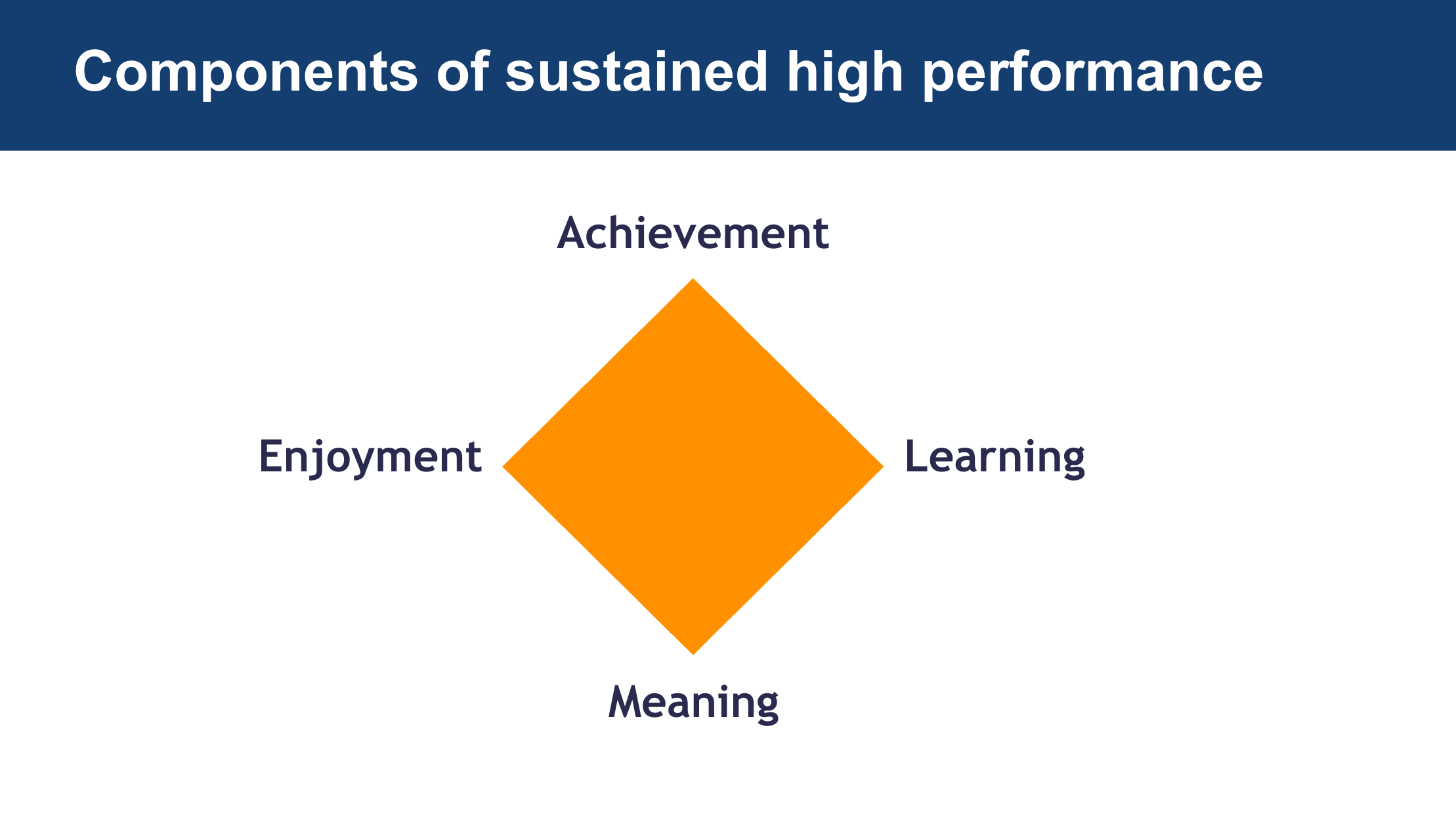
The shift we’re seeing is from individuals coping to systems enabling. Future leaders need to design the conditions in which teams can genuinely thrive: structures and norms that distribute complexity rather than concentrate it. This includes creating psychological safety without sacrificing quality – moving past the false dichotomy of ‘high performance versus wellbeing’ to establish sustainable performance as an integrated system.
4. When Conversations Die
A striking trend: we’re hearing more often that emails are going unanswered, conversations are ending without closure…clients are noticing it, and so are we. Not answering can also be a form of communication itself, preserving flexibility for the sender while creating confusion for the receiver. Have we become too busy, or have we lost the courage to say what really needs to be said?
Speaking clearly, listening generously, and daring to disagree constructively are becoming rare leadership skills. However, these are the very muscles we need to strengthen if we want to keep moving forward.
5. The rise of AI: human questions nobody’s asking
While AI has become the new normal, few conversations are about its impact on relationships, dynamics and teams. What does leadership mean in a context where human judgment is increasingly augmented, or replaced, by algorithms? Courageous leadership means asking not just ‘how do we use this?’, but ‘how does it change us?’ How is AI shaping incentives and accountability on your team? What dynamics is it creating (or quietly eroding) that you might not yet see?
From managing to leading your people and AI: A crucial emphasis will be on transforming team leaders from simply managing processes and tasks (a hygiene function increasingly augmented by AI), to genuinely leading by taking ownership, driving action, and acting as an ambassador for the entire organization. A fascinating challenge for some will be their relationship with the “black box” of AI – a powerful tool they do not fully understand. Leaders will need to develop trust and oversight mechanisms for systems operating on complex, opaque logic, while dealing with the changes in managing expectations, accountability, and oversight in this new world.
The Bottom Line
Whether it’s navigating turbulence, sustaining performance, bridging generations, or making sense of AI – the leaders navigating these challenges well are the ones willing to have the real conversations. Speaking clearly, listening generously, daring to disagree constructively: while increasingly rare skills, they are the ones most worth (and necessary) developing.
This is what we do best – creating structured, safe spaces where difficult topics can be named, explored, and navigated together. If any of this resonates with what you’re seeing in your organization, we’re here to help.